
Simulator Solutions
Simulators for Metro/Locomotive Industries
Advanced Operation, Maintenance & Training Simulators for Metro & Locomotive Systems
MELSS is a leading provider of high-fidelity simulators for the Metro and Locomotive industry, designed to enhance operational efficiency, safety, and workforce readiness. As urban transport systems evolve, our simulators empower metro corporations, railway operators, and OEMs with precise, cost-effective solutions for driver training, maintenance, and system-level operations.
Our simulators accurately replicate real-world conditions—including tracks, signaling, and emergency scenarios—allowing immersive and repeatable training without service disruption. Built with advanced hardware-software integration, our platforms ensure consistent performance and measurable learning outcomes.
We offer:
Metro Subsystem Maintenance Simulators:
Subsystem Maintenance simulator (SSMSM) for the following major Metro Subsystems
HVAC/VAC
Doors including Detrainment door
TCMS
Converter inverter and Auxiliary Converter
Traction Motors and Gear Box
Brakes and Pneumatics
Vehicle Control Circuits
PA & CCTV Systems,
Bogies, Suspensions and wheelsets,
Couplers and Gangways
Other Salient Features of SSMSM
Subsystem behavioural simulation
Virtual Train navigator
Subsystem Virtual tour
Interactive CBT’s
Fault injection and trouble shooting
-
Metro Driving Simulators: Full cab replicas with or without motion platforms.
-
Loco Driving Simulators: High-fidelity cab replicas with motion integration.
-
Locomotive Maintenance Simulators: For fault diagnostics, repairs, and preventive maintenance.
All solutions are modular, scalable, and built for seamless integration with legacy systems and future upgrades. With a strong focus on innovation and collaboration, MELSS delivers training platforms that reduce downtime, improve safety, and extend asset life—driving performance across the rail ecosystem.
Operational and Maintenance Training Simulators
- Training Simulator for Defence
- Maintenance Simulator Metro
- Driving Simulators for Railways
- Hardware and LRU components
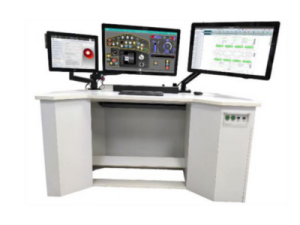
Vehicle Control Circuit (VCC) Simulator
The Vehicle Control Circuit (VCC) Simulator is an innovative training solution designed to demonstrate
the various functionalities of the metro train’s VCC subsystem.
This simulator provides an immersive
and interactive environment to learn and master the intricacies of VCC operation and maintenance procedures.
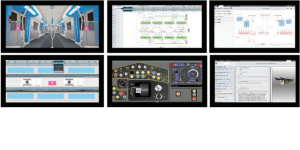
VCC Features
- Interactive Virtual Train Environment
- Realistic Train Dynamics
- Customizable Training Scenarios
VCC Benefits
- Enhanced Learning & Proficiency
- Cost-Effective Training
- Unmatched Safety
Simulators for Aerospace & Defence
MELSS designs and develops advanced maintenance and training simulators for the aerospace and defence sectors, supporting India’s Atmanirbhar Bharat initiative. Our high-fidelity simulation solutions enhance operational readiness, safety, and cost-efficiency.
We offer custom-built simulators for aircraft systems, avionics, ground-based defence equipment, and weapon platforms. These systems replicate real-world scenarios in a virtual, risk-free environment—enabling hands-on training in fault diagnostics, repair procedures, and system-level maintenance.
Our solutions include:
-
Computer-Based Trainers (CBTs)
-
Part Task Simulators
-
Full-Scale Maintenance Simulators
With modular and scalable architectures, we align our simulators with mission-specific needs. Our expert team delivers turnkey solutions using the latest in simulation, visualization, and HMI technologies—empowering defence professionals with the skills to perform with confidence and precision.
Some of our offerings are
IL 76/78 Fuel System Simulator
The IL 76/78 Fuel System simulator is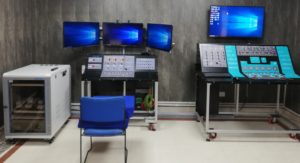 a state of the art system which simulates the entire functionality of the fuel system of IL 76/78 Aircrafts. The Simulator has various modules like Configuration Module, Information Module, Procedure trainer Module, Fault Simulation Module, Exam Module and self test Module. Various operation and maintenance activities of the fuel system are simulated as an interactive CBT. The Actual switches and LED’s in the fuel system are simulated as a hard panel to provide the look and feel and are interlinked with the Simulation software. The movement of the switches will simulate the required actions on the soft panel.
Engine Control Test Set (ECTS)
The Engine Contr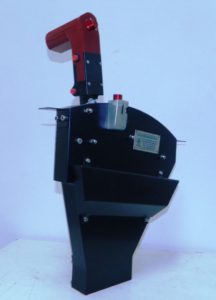 ol Test Set is used simulate the throttle positions and conditions used for engine control. It consists of a PC, Data Acquisition Card, Touch Panel Display and Replica Throttle custom designed and fabricated by us. The PC is connected with the DAQ card mounted in the throttle. This card is used to sense throttle position and also get switch positions. The touch screen display is connected with PC to perform various test sequences.
Our ECTS supplied to Indian Airforce received an appreciation letter from the Hon’ble Prime Minister Shri Narendra Modi.

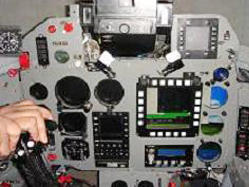 APTT is used to impart training to pilots and the maintenance crew. APTT uses a simulation software to duplicate the operation and functionality of an actual aircraft system.
This facilitates the crew to get hands-on experience in both “on-ground” and “in-flight” conditions. This cost effective system adds value to the training imparted to the crew and avoids inadvertent human error due to the lack of training and insufficient practice.
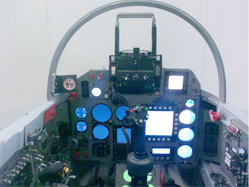 ASMS accurately reproduces the face panels of the components/indicators in the cockpit and the information on the test equipments as it would be displayed on a real aircraft system.
The students can apply their theoretical knowledge to locate the cause of the failure and gradually acquire logical troubleshooting skills.
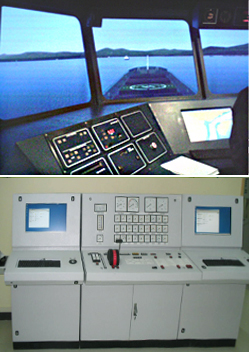 Ship’s bridge simulator provides realistic training to mariners with different levels of experience, ranging from captains and pilots to the mates-to-be. The bridge simulator provides the means for satisfying the training objectives for the trainees like obtaining a degree of skill in coastal navigation within a short time period that will help them apply these skills effectively at sea. Further, formulation and execution of a detailed passage plan, including the ability to track passage progress using realistic navigation aids, radar presentations and/or visual scene.
The simulator also provides gain awareness of the visual interaction and the practice of good watch keeping through realistic visual presentation accurately synchronised with the radar display. It facilitates understanding the principle, use, capabilities and limitations of the individual equipment on the bridge in order to provide maximum training benefit.
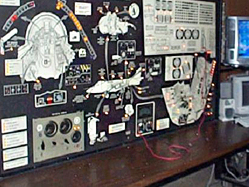 The sea king 42B and sea harrier FRS Mk51 simulation systems serve the purpose of training engineering personnel in understanding system maintenance procedures to enable trainees to become proficient in troubleshooting various aircraft sub-systems through the use of simulated switches, displays, control instruments, meters and keyboard. Moreover, the simulators enable effective and efficient classroom instruction, individualised practice and testing for related troubleshooting procedures.
Their sizes ensures effective visibility of indicators and the design permits easy operation of the controls. The simulators have provision to visualise the parts of the subsystems through television and to hear audio effects through multimedia, which makes the system understanding simpler.
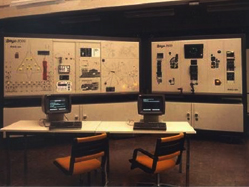 NWS-MS is used as a training aid for training IAF maintenance personnel and operators in the maintenance (functioning, troubleshooting and failure analysis) of navigation and weapon systems of mirage 2000 aircraft. The behaviour of the NWSMS system is similar to that of an actual mirage 2000 aircraft. The simulated responses of the navigation and weapon system under faulty conditions are akin to that of an actual aircraft.
The total scope of work involves reconditioning the existing unserviceable simulator by providing a PC based COTS solution, which is easily maintainable and upgradeable. The NWS-MS software has all the functions similar to the existing system.
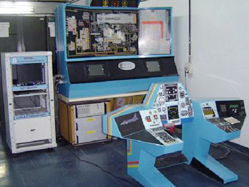
The Engine Maintenance System Simulator (EMSS), is a self-study training aid used to train pilots, engineers and technicians on the M53-P2 engine used in the Mirage-2000 aircraft.
The simulator is a computer controlled self-study system, extensively used during training of aircrew, engineers and technicians on engine of Mirage 2000 aircraft. The EMS can simulate complete starting sequence, ground running of the engine in different ratings and various in-flight emergencies. An elaborate procedure for engine maintenance is incorporated in the simulator.
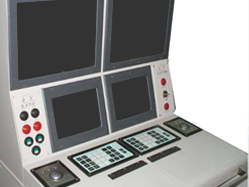 The Combat System Simulator (CSS) comprises of different types of consoles developed by MELSS which are used to impart training to the command and control team on various sensors and systems in a well organised but cost effective method.
It is also utilised to evaluate the performance of individual team members by comprehensively recording their actions and training the operator in manning the sensors and segments effectively.
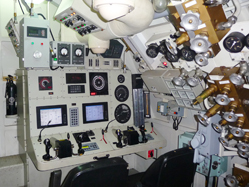 Submarine Control Simulator(SCS), is intended to impart realistic environment training for a submarine crew in the aspects of ship operations such as diving and surfacing control, submerged control, snorting control, surfaced control, firefighting drills and response to alarms.
Simulation includes emergency blowing of main ballast tank by air and hydrazine, snorting drills and submerged anchoring and bottoming.
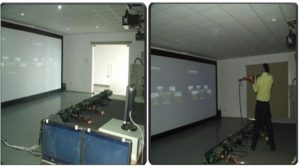
- State-of-the-art modular training simulator
- Compatible with INSAS rifles, sten gun, 9mm pistol, MG, etc.
- Multilane Flat Screen System
- 3D Computer Generated Images & Videos
- Basic and Individual Lane Marksmanship Exercises
- Tactical Group Exercises
- Wide range of Training Scenarios
- Students can experience realistic recoil, view replays and analyse own performance, which helps in improving one’s marksmanship.
- These systems have been supplied to Airforce and the Police Force.